Demo WGU Applied Algebra Exam Questions
Demo practice questions for guest users.
Question 1
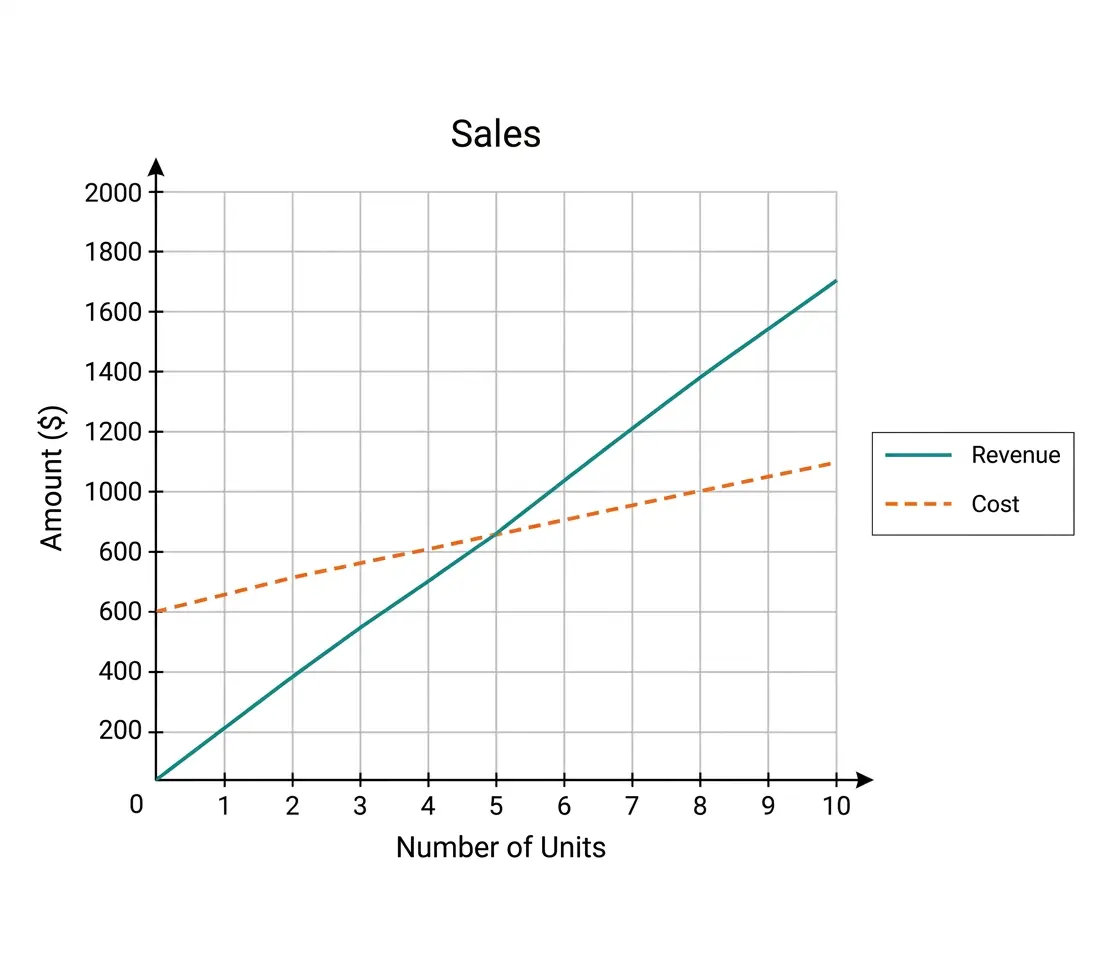
The graph shows the functions that model the cost and revenue. How many down quilts need to sell to break even/start making a profit?
Correct Answer: B
Explanation:
This question asks us to interpret a graph showing cost and revenue. In Applied Algebra, the break-even point is where
This question asks us to interpret a graph showing cost and revenue. In Applied Algebra, the break-even point is where
On a graph, this happens where the revenue line and the cost line intersect. From the graph: The solid blue line represents revenue. The dashed blue line represents cost. The break-even point occurs where these two lines cross. Looking carefully at the graph, the two lines intersect at approximately: The horizontal axis represents the number of units, meaning the number of down quilts sold. So the person needs to sell about: to break even. After selling more than 6 quilts, the revenue line is above the cost line, meaning the person begins making a profit.
Question 2
The number of property sales in a region this year is expected to be 6 less than the number of property sales in the region last year. The function represents the number of property sales this year, where represents the number of properties sold last year. Which notation represents the number of property sales this year, given that the number of properties sold last year was 330?
Correct Answer: A
Explanation:
We are told that this year’s number of property sales is 6 less than last year’s number of property sales. Let: and
We are told that this year’s number of property sales is 6 less than last year’s number of property sales. Let: and
Since this year’s sales are 6 less than last year’s sales, the function rule is: The question says that the number of properties sold last year was: Substitute into the function: So the notation that correctly represents the number of property sales this year is: This means: if 330 properties were sold last year, then 324 properties are expected to be sold this year.
Question 3
The graph shows the daily practice duration for a musician, where the number of days since the beginning of the month is along the horizontal axis and the number of minutes practiced per day is along the vertical axis
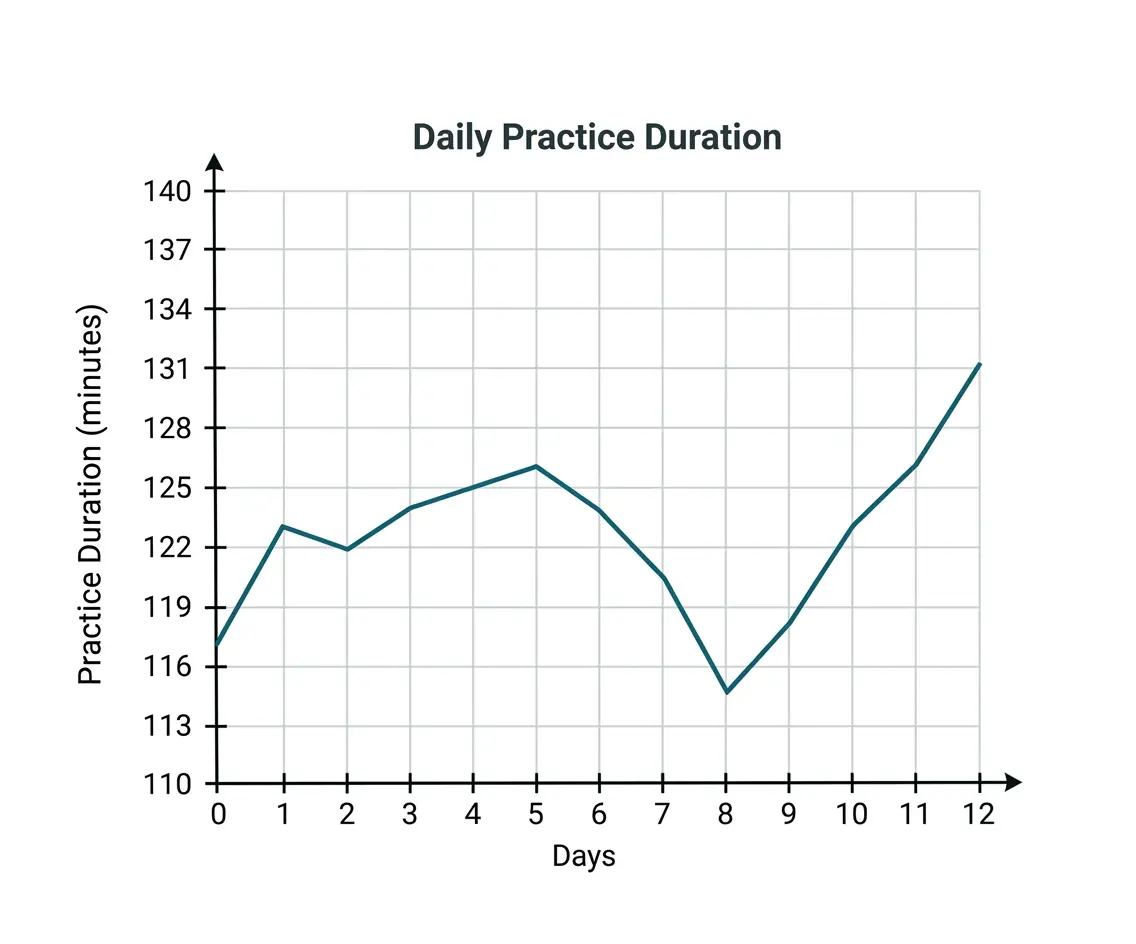
Based on the graph, what was the practice duration for day 8?
Correct Answer: A
Explanation: